
Features
One panel for your whole SRT operation
Receive, convert and deliver. Then watch it, get alerted, and manage every device from the cloud.
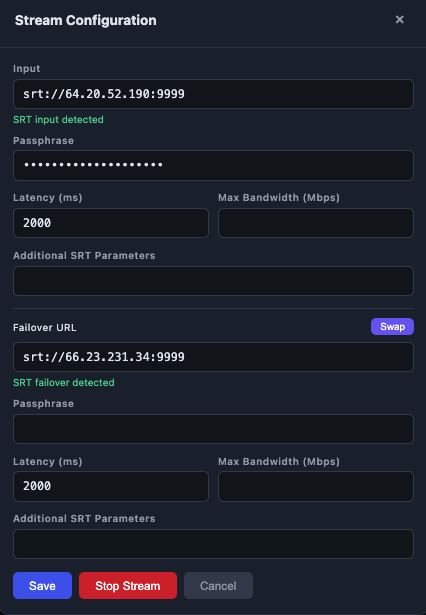
Receive SRT with automatic failover
Point the gateway at your SRT source in caller mode. Add a failover source and it switches over on its own when the primary drops.
- Caller-mode SRT input
- Primary + failover with automatic switchover
- Passphrase, latency and bandwidth control
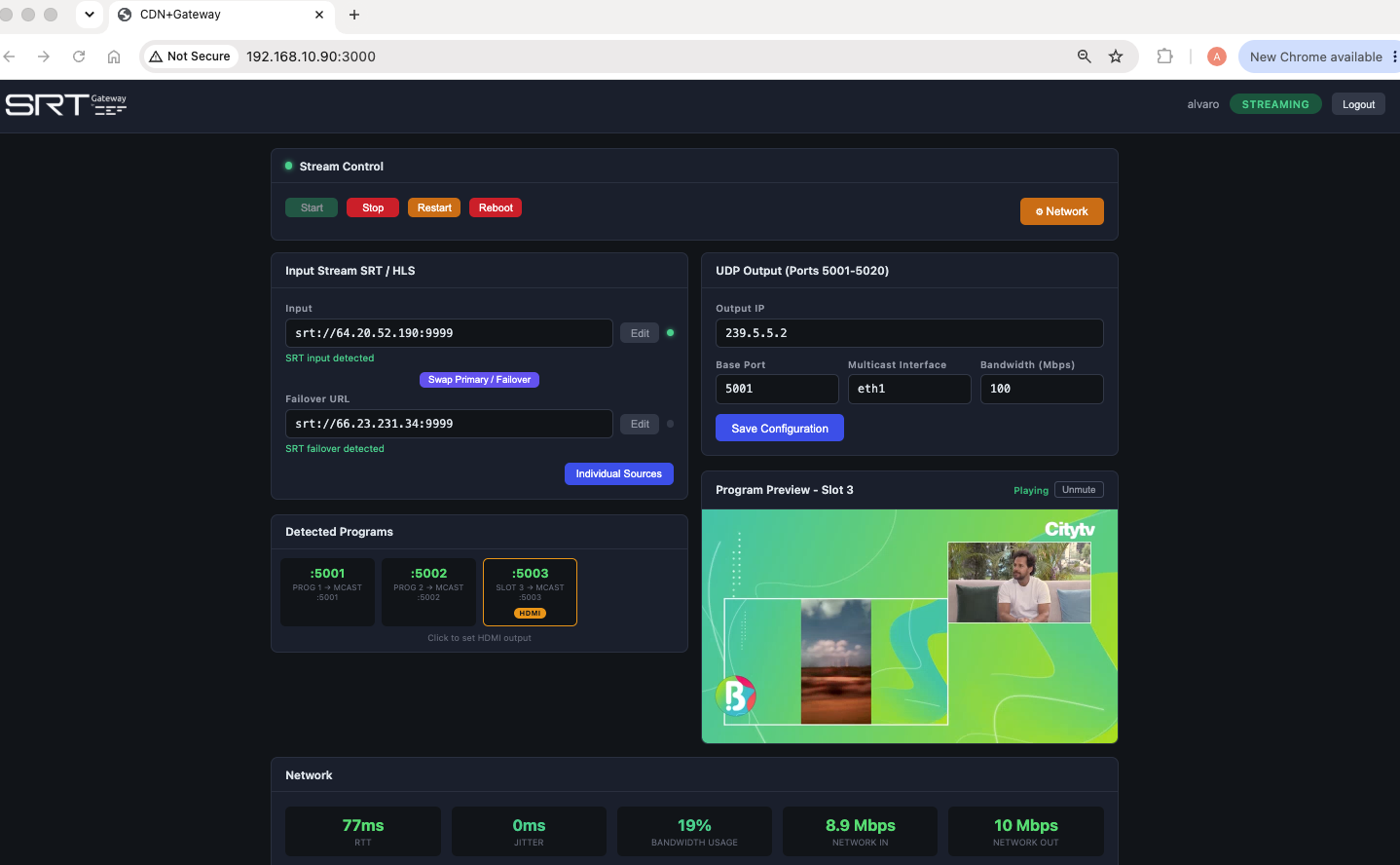
Output to UDP multicast and watch it live
Each detected program maps to its own UDP multicast address. Preview any program in the browser and keep an eye on the network in real time.
- UDP unicast & multicast output
- Per-program multicast addressing
- Live RTT, jitter and bandwidth
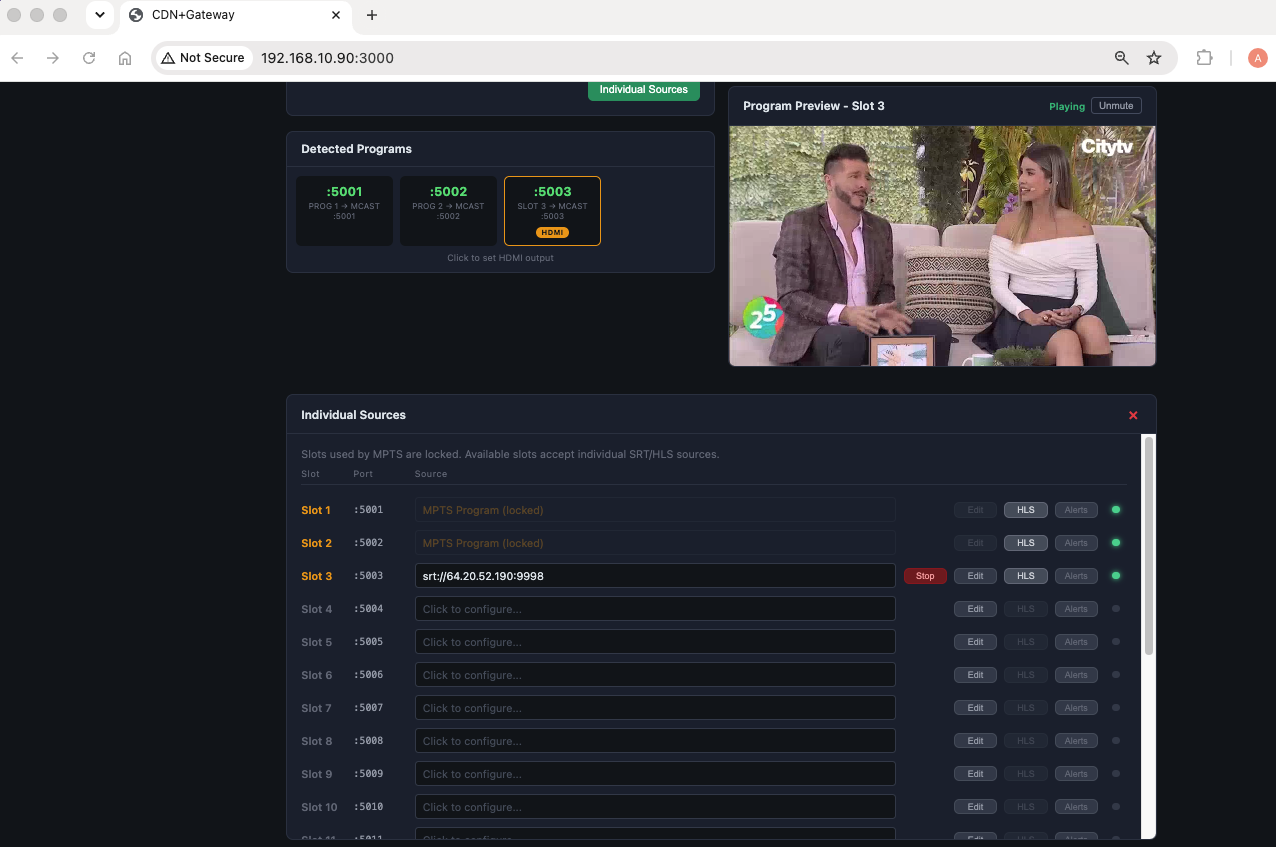
Up to 20 sources per device, slot by slot
An incoming multiplex is split into program slots automatically, and any free slot can take its own SRT or HLS source. Linux scales to as many as 250 streams on capable hardware.
- Auto-split of MPTS into slots
- Individual SRT / HLS source per slot
- Up to 20 streams on Raspberry Pi · 250 on Linux
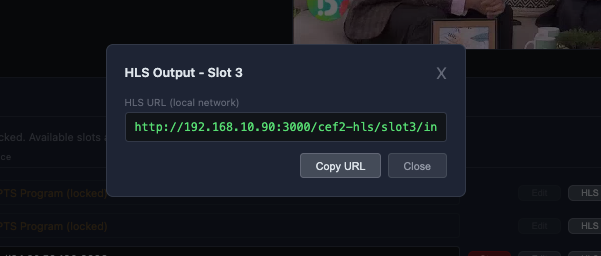
A ready-to-use HLS link per program
Every program also gets a clean HLS URL on your network. Copy it and hand it to a player, middleware or app.
- HLS output alongside UDP
- One URL per program
- HDMI output (H.264 / AAC) on Pi 5 and Linux
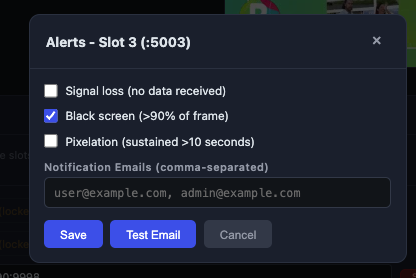
Email alerts that catch real failures
Get notified the moment a program goes wrong, not just when it stops. Detection covers signal loss, black screen and sustained pixelation.
- Signal loss, black screen, pixelation
- Email notifications per program
- Test before you rely on it
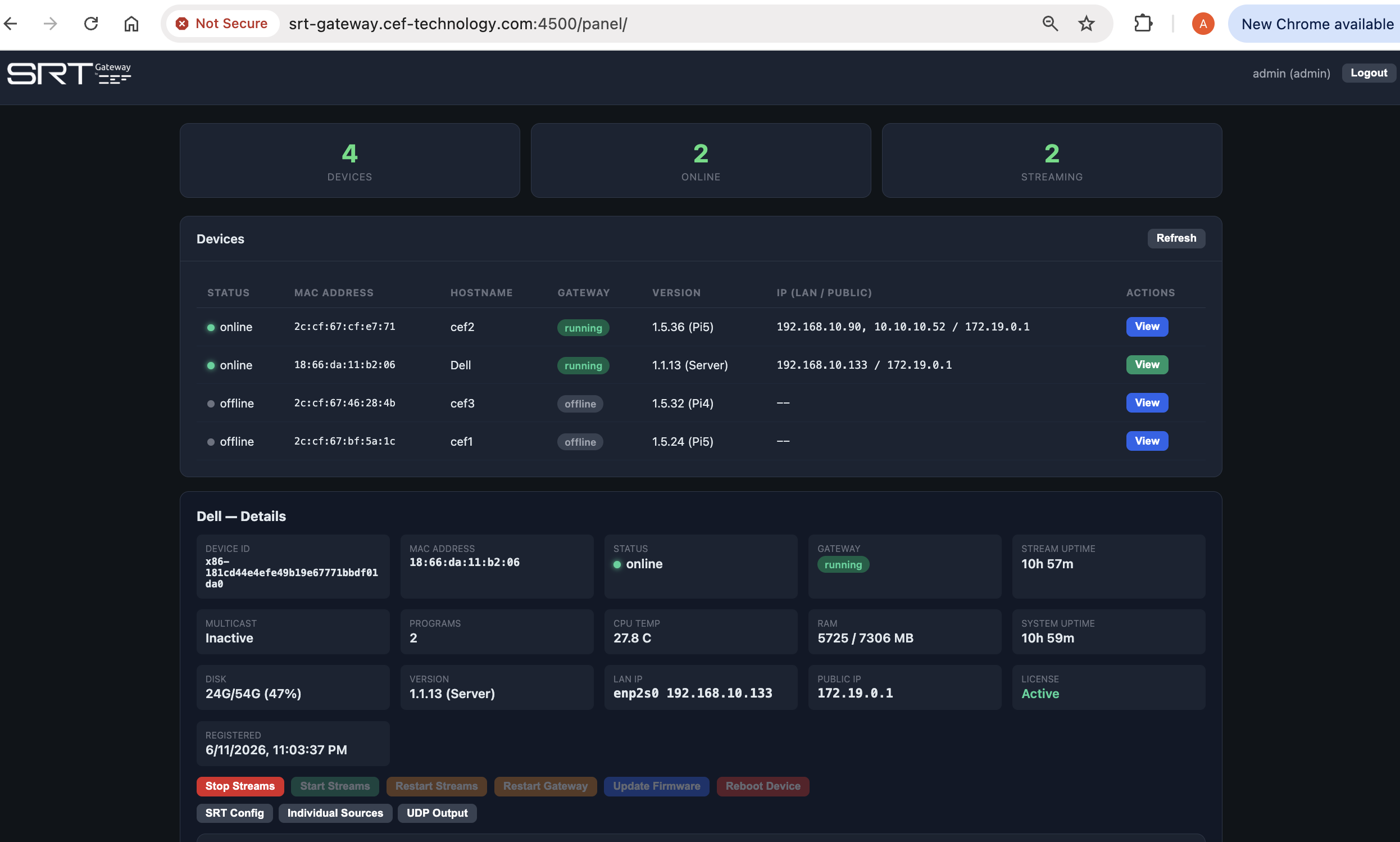
Manage your whole fleet from the cloud
See every gateway in one place, with online status, version and license. Configure or control any of them remotely, from anywhere.
- All devices grouped in one view
- Remote config: SRT, UDP output, sources
- Start / stop streams, update, reboot remotely